You might be thinking that the places you absolutely need to visit to say you have been to Rome are the Colosseum and the Vatican Museums, but I’m here to challenge the conventional school of thought and equip you with the right mindset to discover Rome from its intimate soul.
Of course, the Colosseum is spectacular and an important piece of Roman history and engineering, but I have written about it extensively and have also suggested the best tours to take to fully enjoy your visit.
And what about the Vatican Museums? Of course, they are important: they have been proudly standing there for five centuries and show no sign of cooling. But also the Vatican Museums have been largely covered on Rome Actually and I have even suggested the best tours to discover these amazing Vatican galleries.
Along these famous sites, I could list a few others that are never missing in most general tours of Rome, such as Piazza Navona, the Spanish Steps, the Pantheon and the Trevi Fountain.
But in almost 3,000 years of glorious history, can these be the only landmarks worth visiting in Rome? Adding to that, are these really the most meaningful sites to visit to be able to say that you have seen and understood Rome?
So, what are the five places you must see to say you have visited Rome?
Curious about the real Rome? I’m here to help!
Check out my customised Rome itineraries and let me build the perfect trip for YOU.

Palatine Hill
Part of Rome’s (and possibly Italy’s!) most famous ancient ruins, I feel that Palatine Hill is the most neglected area of the Colosseum archaeological park. The Colosseum itself and the Roman Forum are usually the most visited and crowded areas, with the mighty amphitheatre being the undisputed star.
Certainly more visually majestic, the Colosseum attracts more visitors who often buy a ticket only for this famed amphitheatre, and definitely more photography enthusiasts.
Palatine Hill, however, is not only where most imperial villas were built, but also where the mythical foundation of Rome is located. Even leaving the myth of she-wolf-fed twins Romulus and Remus aside, historians could find traces of an ancient settlement with a king, leading to the belief that it could have been linked to the origins of what would become Rome.
While it’s included in the ticket for the Colosseum archaeological park, Palatine Hill is often visited in a rush when tourists are tired after exploring the Colosseum and the Roman Forum. I suggest devoting more time to this important side of Rome and better with a knowledgeable local guide.
Check out the best hotels near the Colosseum in Rome

Rome aqueducts
What has Rome been most famous for throughout the centuries and among historians, architects and engineers? Its amazing aqueducts, of course! True masterpieces of engineering, you can find traces of these majestic constructions in many places in Rome.
One of the main places to see some spectacular ruins is the Park of the Aqueducts near the Appian Way. Impossible to miss them as there are the ruins of no less than six out of the 11 historic Roman aqueducts: Anio Vetus (underground), Marcia, Tepula, Iulia, Claudio, and Anio Novus. Here, you can even organise a lovely day out with a picnic, some walking, and there are bars, restaurants, and children’s playgrounds.
More inside the city, specifically in the Esquilino area, is Porta Maggiore, a large street hub where there are also traces of several ancient Roman aqueducts as here eight of them merged and two are still visible: Anio Novus, Aqua Claudia.
Exploring the sites, history, and engineering skills behind the Roman aqueducts is very enriching and revealing of ancient Rome.
The Appian Way
All roads lead to Rome! This might sound like trivia, but it’s true. The so-called consular roads were built to connect Rome to its provinces in the Italian peninsula but also in the surrounding countries like ancient Gaul (modern-day France).
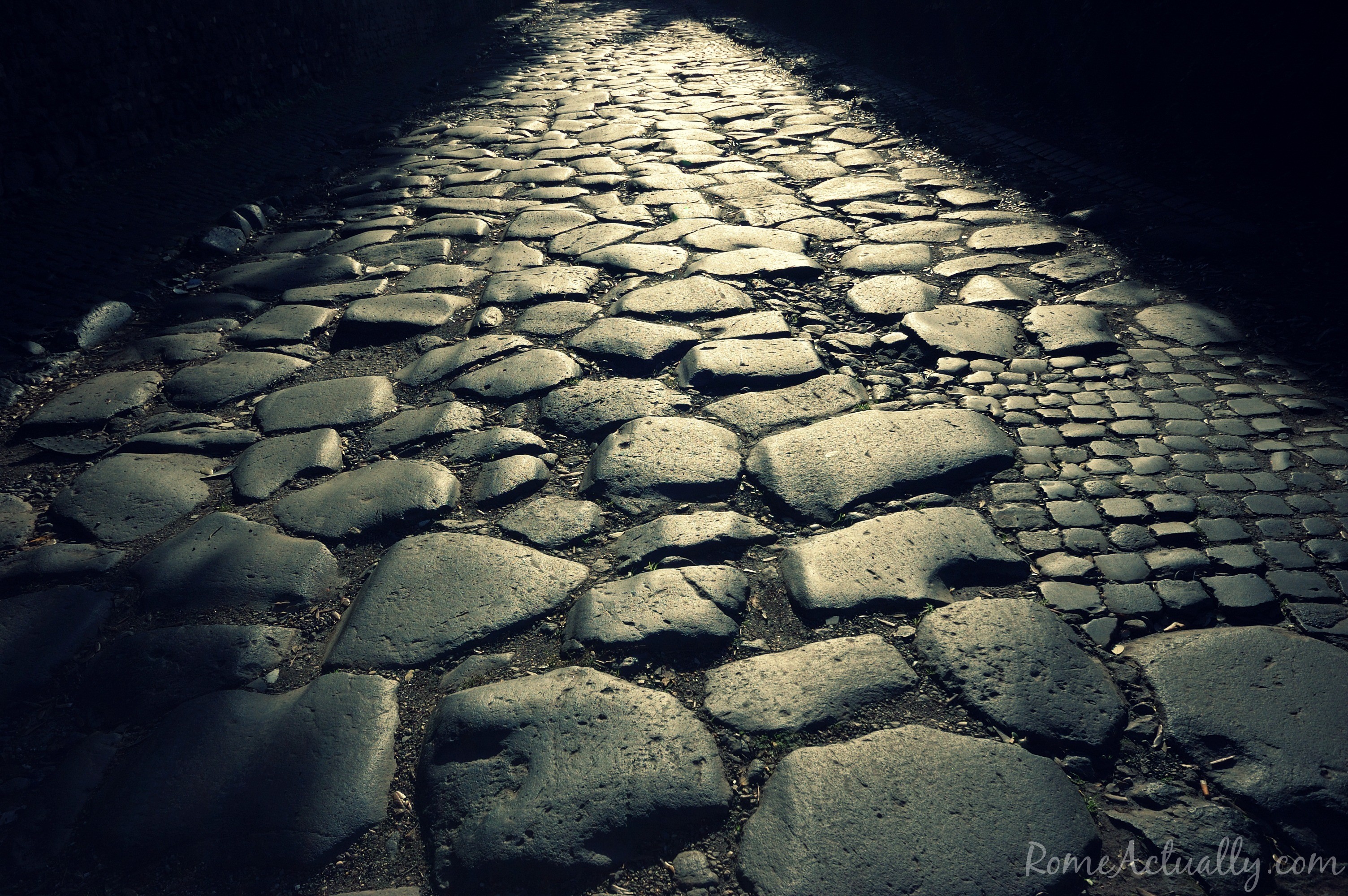
Also known as the queen of all roads, the Ancient Appian Way roughly started around the Porta Capena Gate near the Circus Maximus, all the way to Capua and then to Brindisi in the modern-day Puglia region.
In the first 4 km, the ancient road is not visible anymore but around the crossroad with Via Ardeatina, it’s possible to travel along the original structure of this important road and see all the monuments and buildings that line it up for several kms.
Several tours allow you to explore the Ancient Appian Way in the company of a tour guide. These are great tours, one semi-private for a small group of six participants max and one private.
Rome Catacombs
While this is mainly linked to early Christian history, the catacombs scattered around Rome testify to a long period, as the shift from paganism to Christianity unfolded over centuries. From secret worship places to unauthorised graveyards, the catacombs cut a fascinating glimpse of Roman life 2,000 years ago, together with its art, frescoes, and daily life.
Many are the catacombs of Rome, from those in the Appian Way to Via Nomentana and Via Salaria, each with its specific features and history. Some are possible to visit independently, while others require a guide. Anyway, I usually suggest visiting with a guide to avoid missing a lot of interesting information and details. These are good catacombs tours in Rome: semi-private, private, and for families with kids.
Saint John Lateran Basilica
Without taking anything away from Saint Peter’s Basilica in the Vatican, the most important Basilica in Rome is actually Saint John Lateran. Granted, Saint Peter’s is more visually stunning and a goldmine of artwork and historical facts, but the Lateran is also a very ancient land home to important pieces of history and the first seat of the Pope.
One of the four Papal Basilicas, also Saint John Lateran has a Holy Door that opens during the Jubilee Year. Next to it is the Scala Santa, Holy Staircase, that pilgrims climb on their knees, and in front is a large square that was revamped on the occasion of the last Jubilee in 2025. During these latest works, diggings brought to light incredible historical findings, including the residence of the first popes, but they were analysed and then covered again.
Are you feeling like discovering and enjoying the real Rome? I’m here to help!
Check out my customised Rome itineraries and let me build the perfect trip for YOU.